
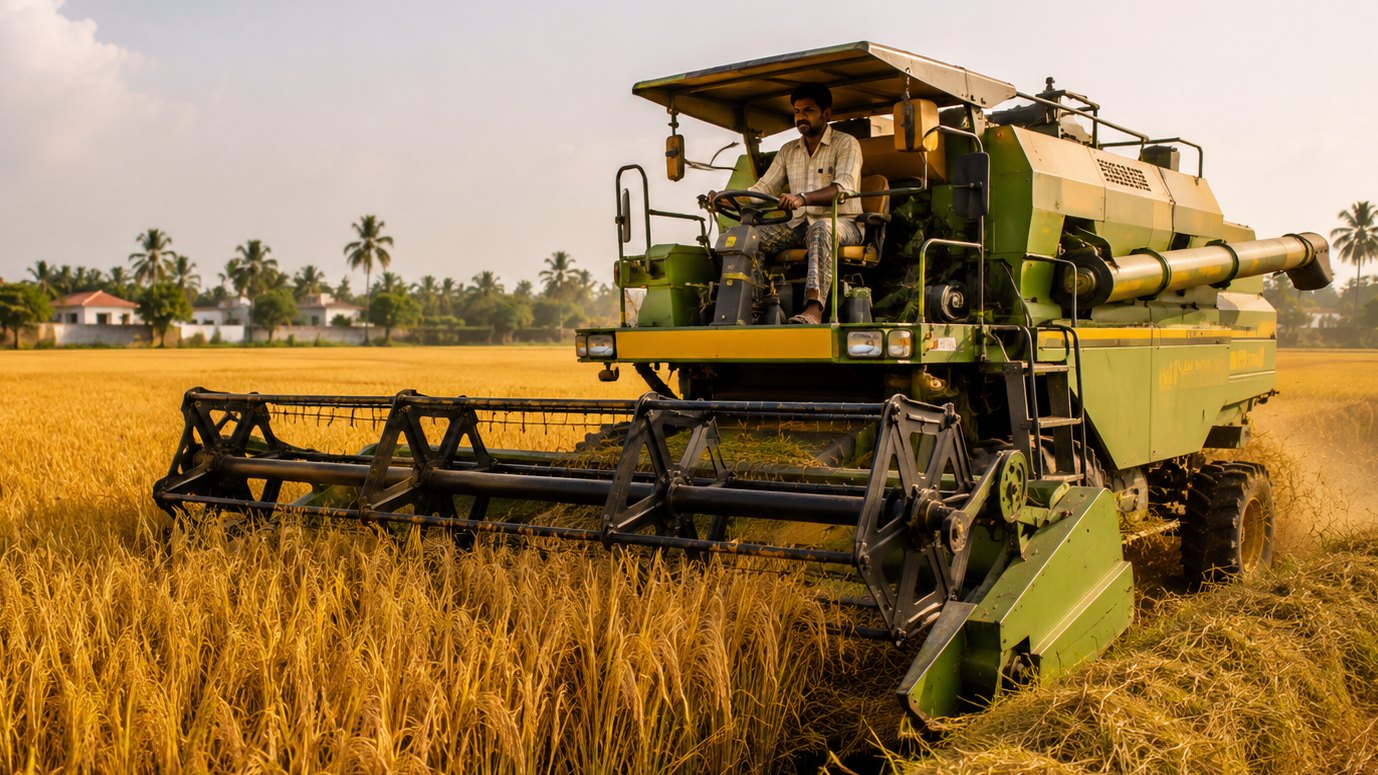
Complete Guide to Agricultural Machinery Maintenance for Better Performance and Longer Machine Life
Overview
Full Article
Complete Guide to Agricultural Machinery Maintenance
Agricultural machinery plays an important role in modern farming by reducing manual labour, increasing productivity and helping farmers complete critical operations within the required time. Tractors, combine harvesters, power tillers, transplanters and other machines often operate for long hours under dusty, muddy and demanding field conditions. Because of this heavy usage, regular maintenance is essential for maintaining dependable performance and avoiding unexpected breakdowns during important agricultural seasons.
A good maintenance program begins with regular inspection. Before operating any agricultural machine, the operator should check the engine oil level, coolant level, fuel level, hydraulic oil, tyres or crawler tracks, belts, hoses and visible fasteners. Small problems such as loose bolts, damaged hoses or abnormal leakage can often be corrected quickly when detected early. Ignoring these warning signs may lead to larger mechanical problems and costly repairs later.
Engine Oil and Oil Filter Maintenance
The engine is one of the most important and expensive components of agricultural machinery. Engine oil provides lubrication to moving internal parts and helps reduce friction, heat and wear. Over time, the oil can become contaminated with carbon, dust and microscopic metallic particles. Therefore, engine oil should be replaced according to the manufacturer's recommended maintenance schedule. The engine oil filter should normally be replaced together with the oil so that fresh lubricant does not circulate through a contaminated filter.
A high-quality engine oil filter helps capture harmful particles and supports cleaner oil circulation. Farmers and equipment owners should always use filters that are suitable for the exact engine or machinery model. Before purchasing a replacement filter, the part number, thread size, dimensions and machine compatibility should be checked carefully.
Fuel System and Fuel Filters
Clean fuel is essential for efficient diesel-engine operation. Dirt, rust, moisture and other impurities in diesel can damage fuel pumps and injectors. A properly maintained fuel filter helps remove these contaminants before fuel reaches sensitive engine components. Many agricultural machines also use a fuel-water separator because water contamination can be a significant problem in diesel storage and field conditions.
The fuel tank should also be kept clean and properly covered. Operators should avoid using contaminated or poorly stored diesel. If the machine becomes difficult to start, loses power or develops irregular engine operation, the fuel filter and fuel system should be inspected as part of the troubleshooting process.
Air Filter Maintenance
Agricultural machines frequently operate in environments containing large amounts of dust, crop residue and soil particles. The air filter prevents these particles from entering the engine. A blocked air filter can restrict airflow and may reduce engine performance. Depending on operating conditions, the filter should be inspected regularly and replaced when required.
Machines working during harvesting or dry-season land preparation may require more frequent air-filter inspection than machines operating in cleaner conditions. Both the primary and safety filter elements should be handled carefully to prevent dust from entering the intake system during servicing.
Hydraulic System Care
Tractors, harvesters and agricultural loaders depend heavily on hydraulic systems. Hydraulic oil powers lifting mechanisms, steering components, implements and several machine functions. Maintaining the correct oil level and using a clean hydraulic filter helps protect pumps, control valves and hydraulic cylinders. Any visible oil leakage should be investigated quickly because low fluid levels can affect system performance and may eventually damage expensive components.
Belts, Chains and Moving Parts
Combine harvesters and other agricultural machines contain numerous belts, chains, bearings, sprockets and rotating parts. These components should be checked for correct tension, alignment and wear. Loose or damaged belts can slip, while poorly lubricated chains may wear prematurely. Bearings and grease points should be lubricated according to the service schedule using the recommended lubricant.
Tyres, Crawler Tracks and Undercarriage
For tractors, correct tyre pressure is important for traction, stability and tyre life. For crawler-type harvesters, track tension, rollers and sprockets should be inspected frequently. Mud, straw and debris should be cleaned from the undercarriage after operation. Proper cleaning and inspection can help identify cracked components, abnormal wear or loose hardware before they cause field failure.
Cooling System Maintenance
The engine cooling system should receive equal attention. Radiators can become blocked by dust, straw and crop material, particularly during harvesting. The radiator surface should be kept clean while the coolant level, radiator hoses and fan belt should be checked regularly. Operating an engine at excessive temperature can result in serious and expensive damage.
Use Genuine or Properly Compatible Spare Parts
Maintenance quality also depends on the parts used during servicing. Oil filters, fuel filters, air filters, belts, bearings and other replacement components should be selected according to the machine model and technical specification. Using an incorrect or poor-quality part may affect performance even if the part appears physically similar. Equipment owners should therefore confirm OEM numbers, compatible models and dimensions before installation.
Article Summary
Learn practical agricultural machinery maintenance tips for tractors, combine harvesters and farm equipment, including engine oil, filters, hydraulics, belts, cooling systems and spare parts.